The setting matters more than you think. Here’s how to dress for it.
Most brides choose their venue before they choose their dress. Which means the setting has already started making decisions for you — about scale, about light, about atmosphere, about what will photograph well and what will feel completely wrong on the day. A dress that looks extraordinary in a sun-drenched vineyard can feel out of place in a candlelit ballroom. A gown that fills a cathedral with presence can overwhelm an intimate garden ceremony. Your venue isn’t just a backdrop. It’s one of the most useful tools you have for narrowing down your options. Here’s how to use it.
The Grand Church or Cathedral
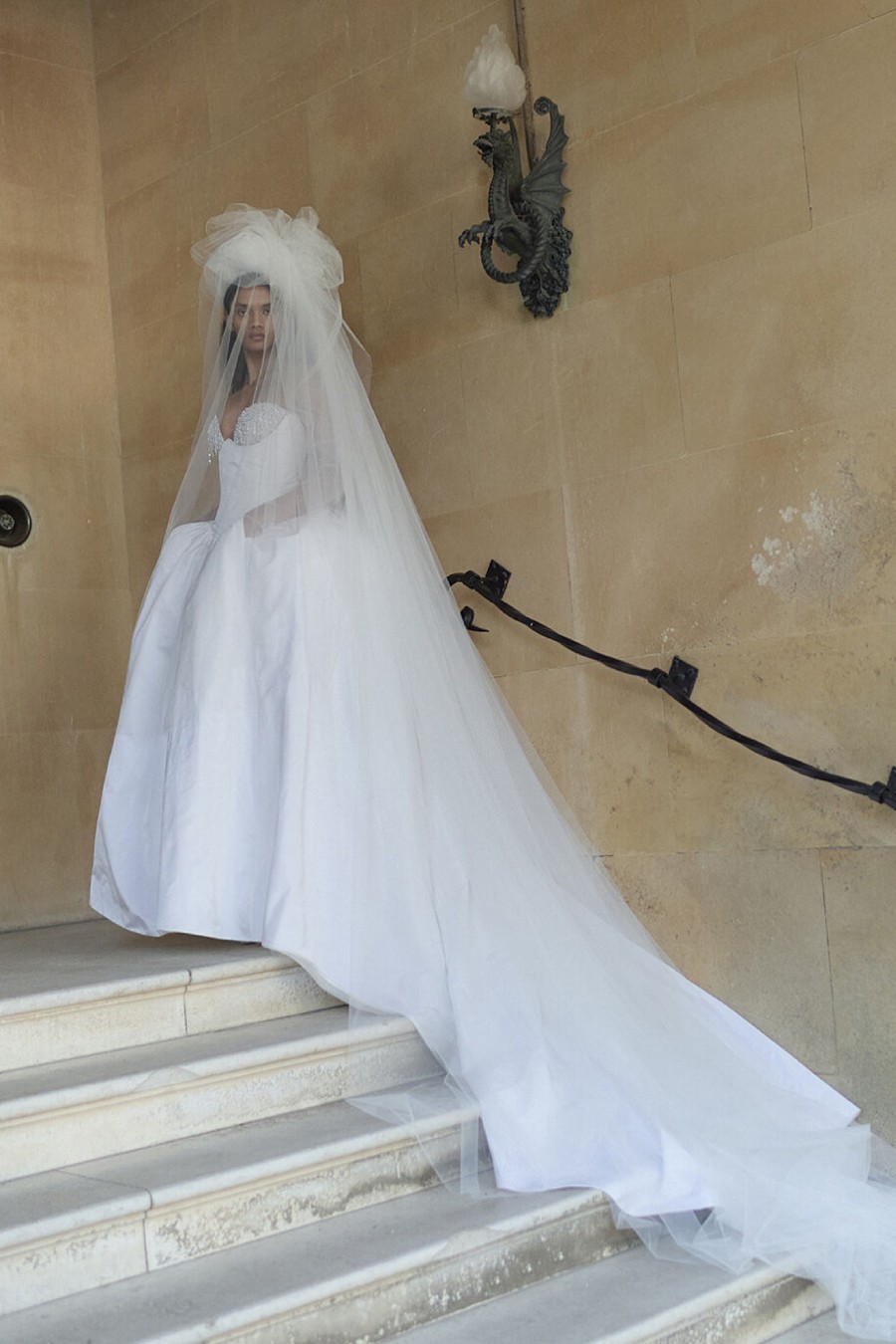
A soaring ceiling, stone floors, stained glass, and a long aisle that gives the dress time to breathe — the cathedral is the original home of the wedding gown, and it shows. Scale matters here. A simple slip dress can get lost in this setting, not because it isn’t beautiful but because the architecture is working against it. The cathedral rewards volume, length, and drama — a full cathedral train, a structured ballgown, a heavily embroidered gown with details that read from a distance. Lace, in particular, photographs extraordinarily well against stone and colored light. This is the venue that justifies the most traditional bridal choices — and makes them look exactly right.
What to think about: A long aisle means a long walk and a long train. Make sure you’ve practiced moving in the dress before the day. Your photographer will have a significant portion of the ceremony to capture the back of the gown — make sure there’s something worth capturing there.
The Formal Ballroom
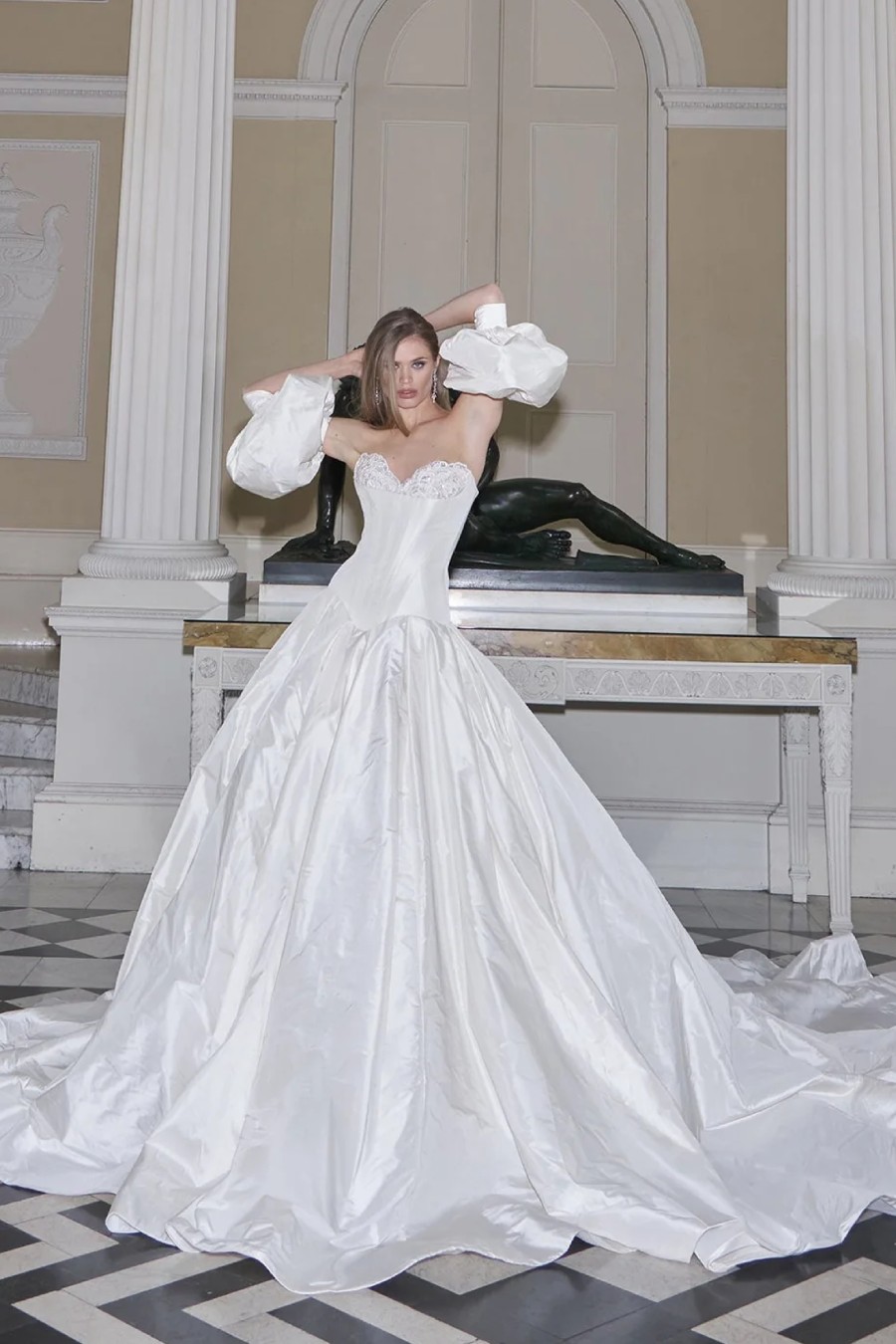
Chandeliers, marble floors, white tablecloths, and guests in black tie — the ballroom sets a tone that the dress needs to meet. This is the venue for the princess ballgown, the structured strapless, the heavily embellished gown that catches light from every angle. Understated minimalism can work beautifully here too, but it needs to be a considered, deliberate minimalism — the kind that comes from an exquisitely cut silk gown rather than a simple slip. Fabrics that photograph well under artificial lighting — duchess satin, Mikado, lace — are natural choices. Chiffon can feel a little lost in the grandeur of a ballroom.
What to think about: Ballroom lighting is almost always artificial, which affects how your dress photographs. Discuss this with your photographer in advance — overly bright white fabric can wash out under direct flash, while ivory and warmer tones hold their detail.
The Intimate Restaurant or Private Dining Room
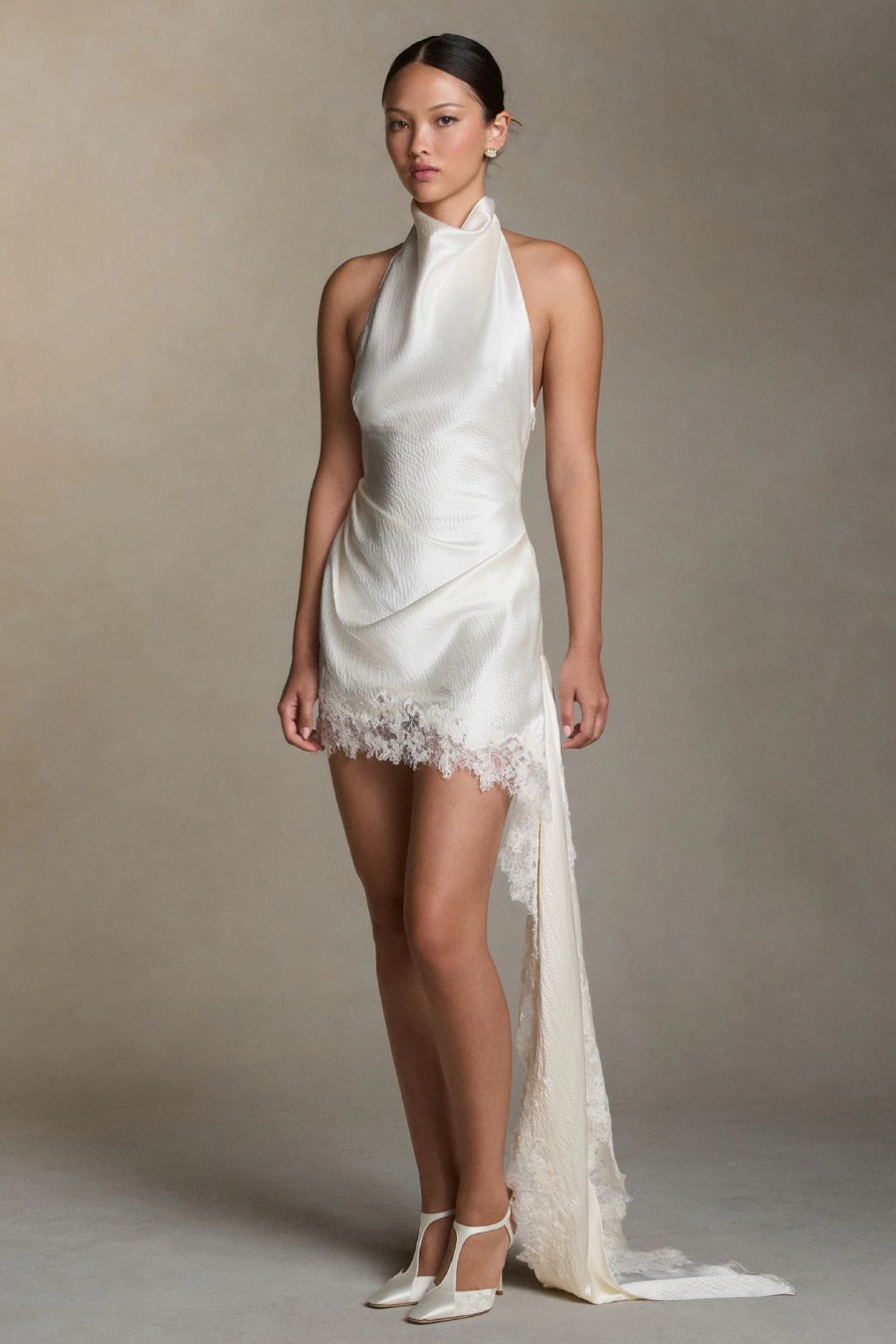
Small, personal, and deliberately unconventional — the restaurant wedding calls for a dress that reads the room. This is not the setting for a cathedral train or a dramatic ballgown. It is the setting for the sleek column, the bias-cut slip, the elegant midi or mini, the bridal jumpsuit or suit. The restaurant wedding is an exercise in considered restraint — a dress that says something specific about who you are rather than filling a space. Non-white gowns work particularly well here, as does anything with interesting fabric, texture, or a single unexpected detail that rewards a closer look.
What to think about: Space is limited. A dress with a long train or significant volume may be genuinely impractical — consider how you’ll move between tables, navigate a small dance floor, and spend six hours in a confined space. Wearability matters more here than almost anywhere else.
The Outdoor Garden or Estate
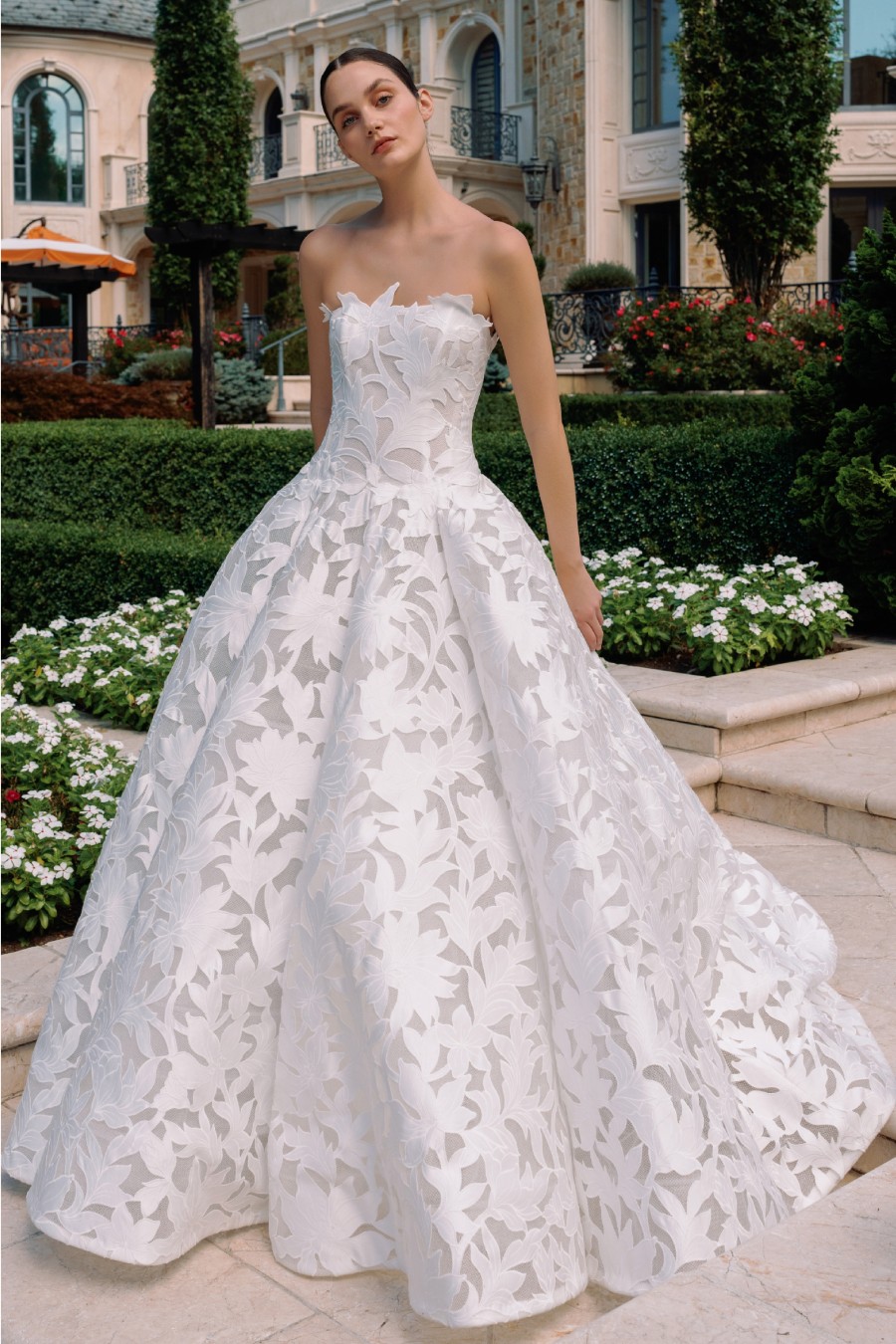
One of the most forgiving settings for a wedding dress — natural light does extraordinary things to fabric, and the green backdrop makes almost every color and silhouette look beautiful. The garden wedding is where flowing chiffon, lightweight silk, lace, and delicate fabrics come into their own, moving naturally with the breeze and catching afternoon light in ways that photograph like dreams. That said, outdoor settings also mean uneven ground, grass, and weather that may not cooperate. A long train is beautiful in a garden — until it isn’t.
What to think about: Consider the ground beneath your feet. Stiletto heels and long trains on grass are a challenging combination. Think about what happens if the weather changes — a lightweight chiffon gown in unexpected wind or rain is a very different proposition than it was when you tried it on indoors.
The Vineyard or Countryside
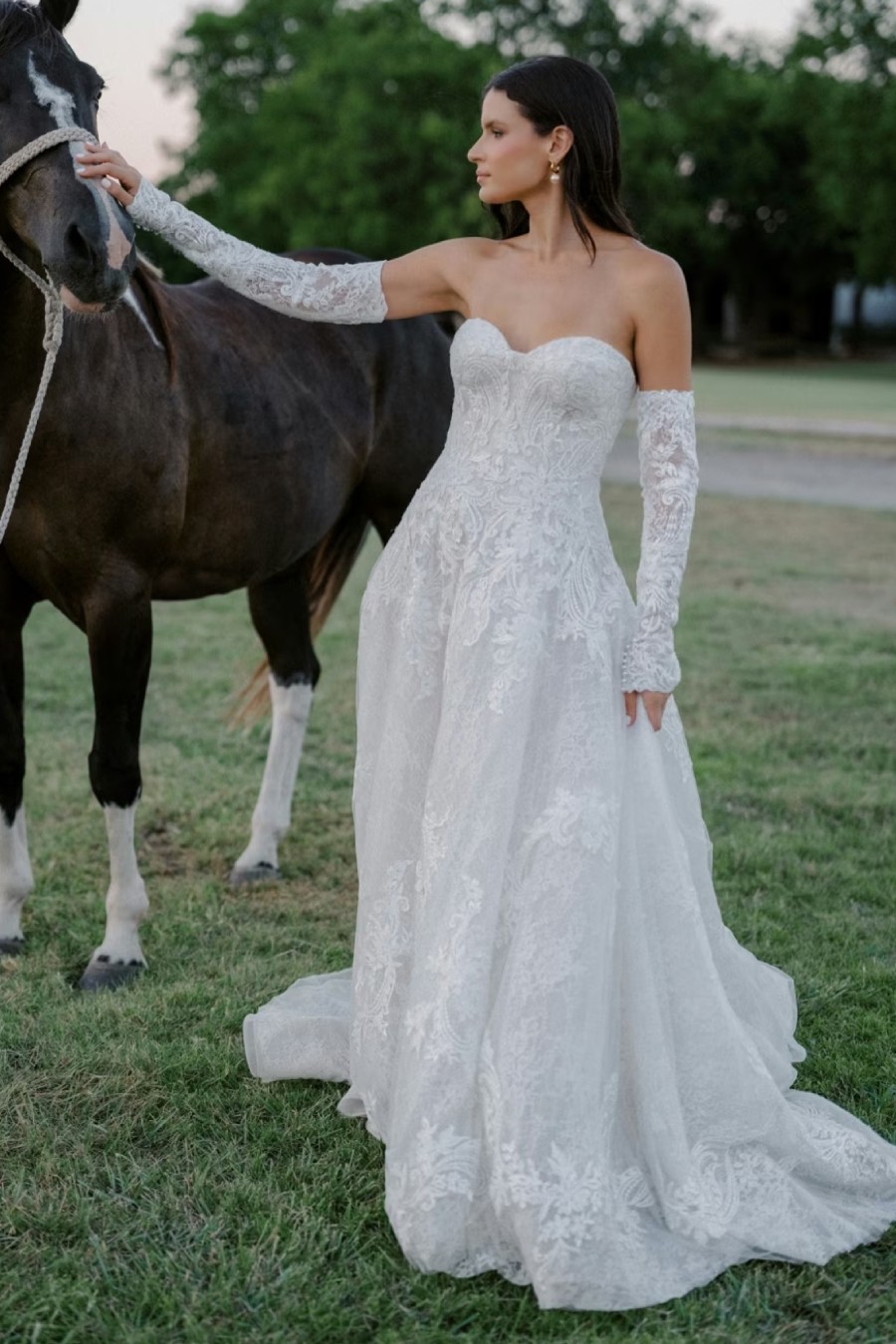
Relaxed, romantic, and golden-lit — the vineyard wedding has its own very specific aesthetic that the dress should lean into rather than fight. This is bohemian country chic territory: flowing A-lines, relaxed lace, non-white gowns in warm champagne or soft blush, and anything that looks like it was made for an afternoon in the sun. Heavily structured gowns can feel overdressed in this setting — not because they aren’t beautiful but because the energy of the venue is telling a different story. The vineyard rewards ease and movement above all else.
What to think about: Golden hour is the gift of the outdoor vineyard wedding — make sure your photographer has time to capture it, and consider how your dress will look in that specific warm, directional light. Ivory and warm off-white tones photograph particularly well at golden hour.
The Beach or Coastal Setting
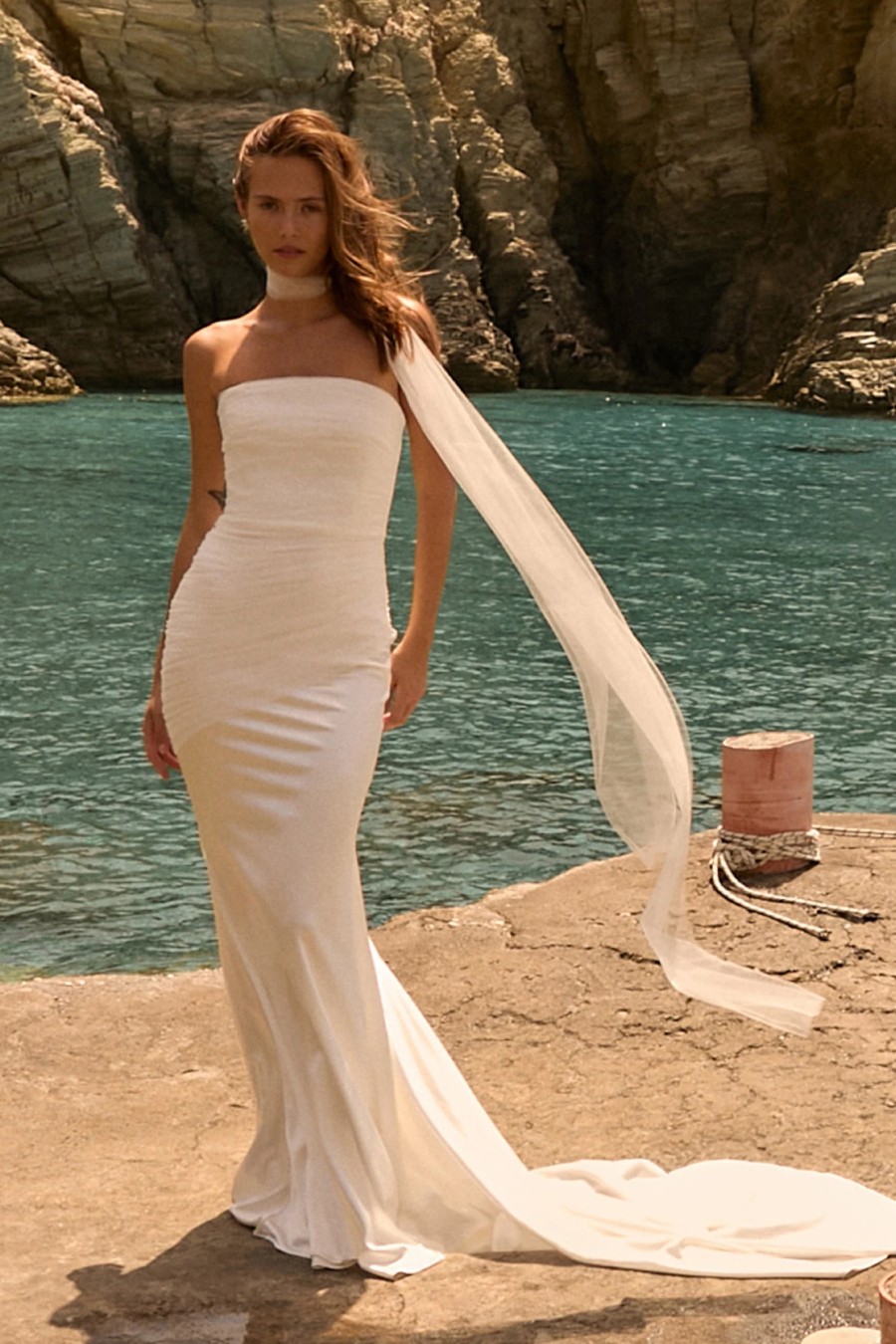
Wind, sand, salt air, and horizontal light — the beach is one of the most photographically beautiful but practically challenging settings for a wedding dress. The short dress, the midi, the lightweight column, and the simple slip are natural fits. Anything voluminous risks becoming a sail. Anything heavily structured will fight the relaxed energy of the setting. The beach rewards the kind of dress that looks beautiful in motion — that moves with the body and catches the breeze rather than resisting it.
What to think about: Sand gets everywhere. The hem of your dress will collect it, drag through it, and take it home with you. Consider a dress with a shorter hem or one you’re genuinely comfortable getting dirty. A removable train is a practical solution for beach ceremonies.
The Industrial Loft or Urban Venue
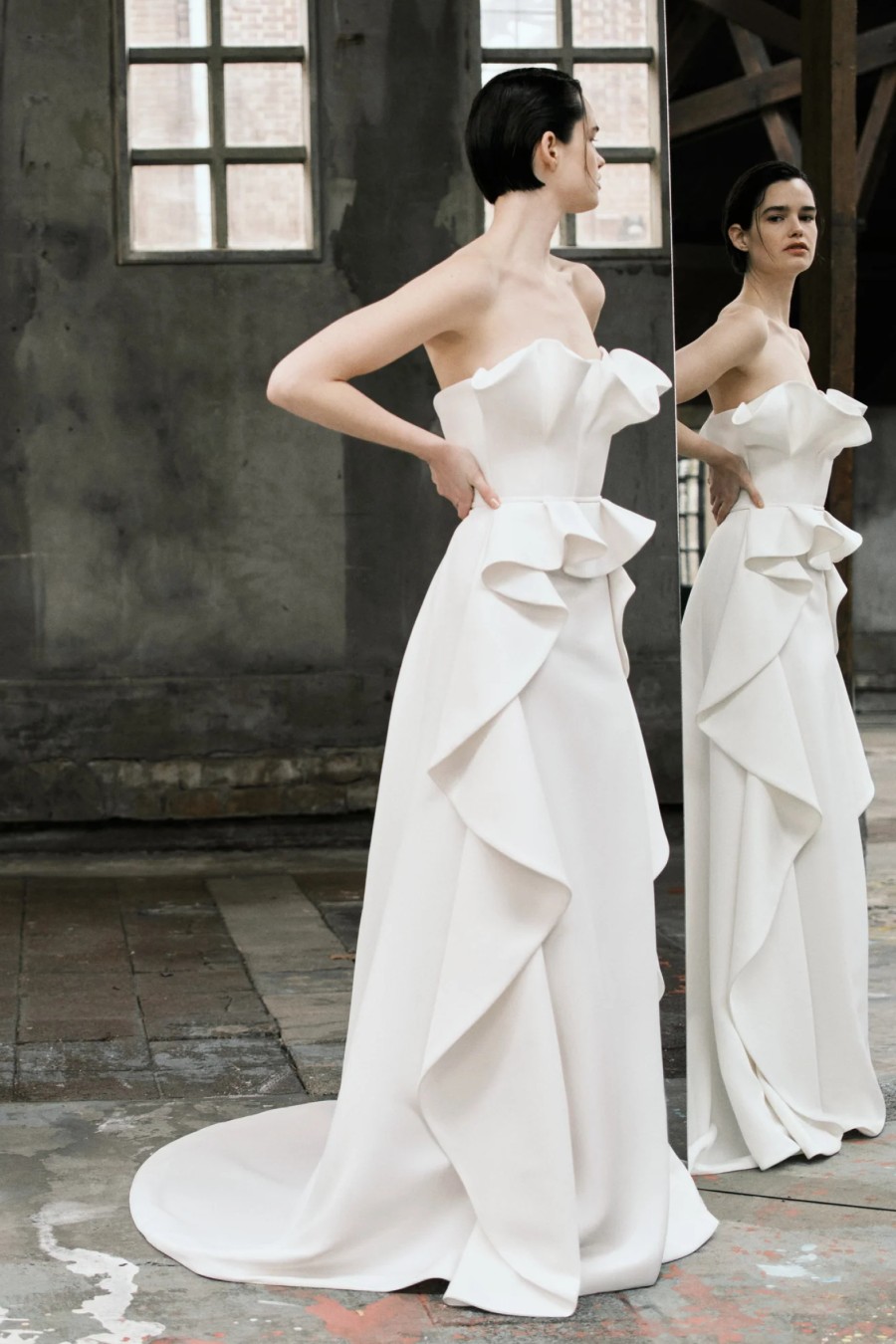
Exposed brick, concrete floors, steel beams, and city views — the industrial venue is the natural home of the editorial bridal moment. This setting rewards fashion-forward choices: the strapless column with architectural details, the bridal suit or separates, the non-traditional silhouette, the unexpected color. Traditional ballgowns can feel incongruous against industrial backdrops — not wrong, but in conversation with the setting in a way that requires intention. If you love the juxtaposition, lean into it. If you want coherence, let the venue guide you toward something more unexpected.
What to think about: Industrial venues often have significant natural light from large windows — which is a gift for photography. Position your key shots near the light source and discuss the direction and quality of that light with your photographer before the day.
The Destination Wedding
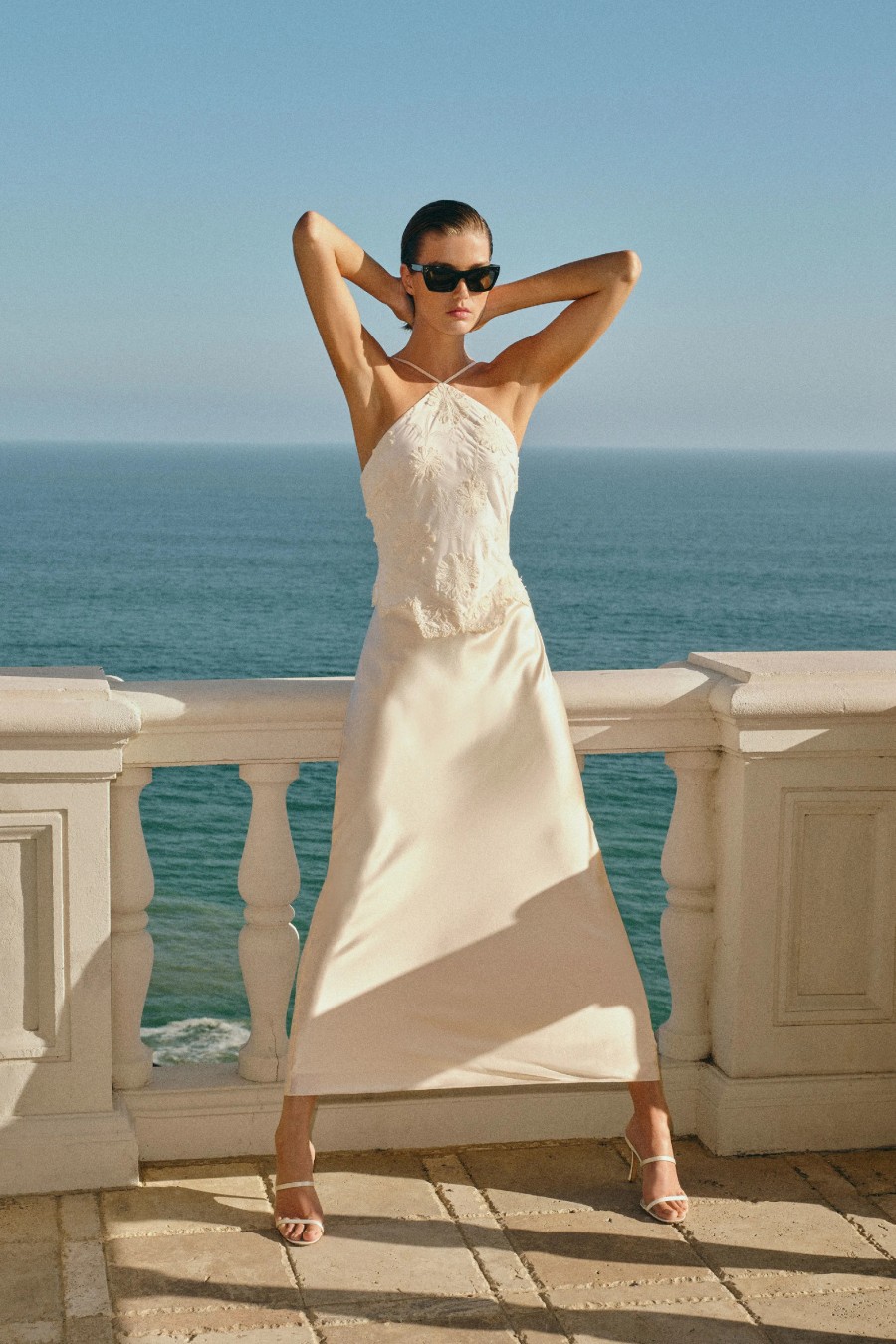
Before anything else — how does the dress travel? This is the question that every destination bride should ask before she falls in love with anything. A dress that requires its own garment bag, a dedicated seat on the plane, and a professional steaming team on arrival is a different logistical proposition than one that packs flat and shakes out beautifully. Beyond the practical, consider the climate and the setting — a Tuscan villa in August, a Greek island in June, a French chateau in October all have very different requirements. The destination wedding rewards the dress that is genuinely suited to its environment — not the dress that was always the dream, transported somewhere it doesn’t quite belong.
What to think about: Research how your chosen fabric travels before you commit. Some fabrics — notably chiffon, crepe, and lightweight silk — recover beautifully from being packed. Others — duchess satin, heavily structured Mikado — may need professional attention on arrival. Ask your bridal consultant specifically about this.
A final note on pre-loved gowns
One of the advantages of shopping for a pre-loved gown on Stillwhite is that many listings include real wedding photographs — which means you can see the dress in an actual setting, in actual light, on an actual wedding day. When you’re searching with a specific venue in mind, those images are invaluable. A dress photographed at a vineyard, a beach, or a formal ballroom gives you real evidence of how it behaves in conditions similar to yours. Use them.
Browse thousands of designer wedding dresses across every silhouette and style on Stillwhite — and find the one that belongs in your setting.
By Kathryn Schrotenboer

 Alaska, Washington