Because the most important decision in your dress search might not be the silhouette. It might be what the silhouette is made of.
Most brides spend a significant amount of time thinking about the shape of their wedding dress — the neckline, the waist, the train — and comparatively little time thinking about the fabric it's made from. This is understandable. Fabric is invisible in the way that construction is invisible: you notice it when it's wrong and take it entirely for granted when it's right.
But fabric is the thing that determines how your dress moves, how it photographs, how comfortable you are at hour eight, whether it survives a destination wedding in a garment bag, how it responds to summer heat or winter cold, and whether the lace pattern you fell in love with on the hanger reads clearly in photographs or disappears into white light. It is, in other words, one of the most consequential decisions in the entire dress search — and almost nobody talks about it in a way that actually helps.
This guide does. Here is everything you need to know about the most important bridal fabrics, what each one does, and how to match it to the specific wedding you are actually having.
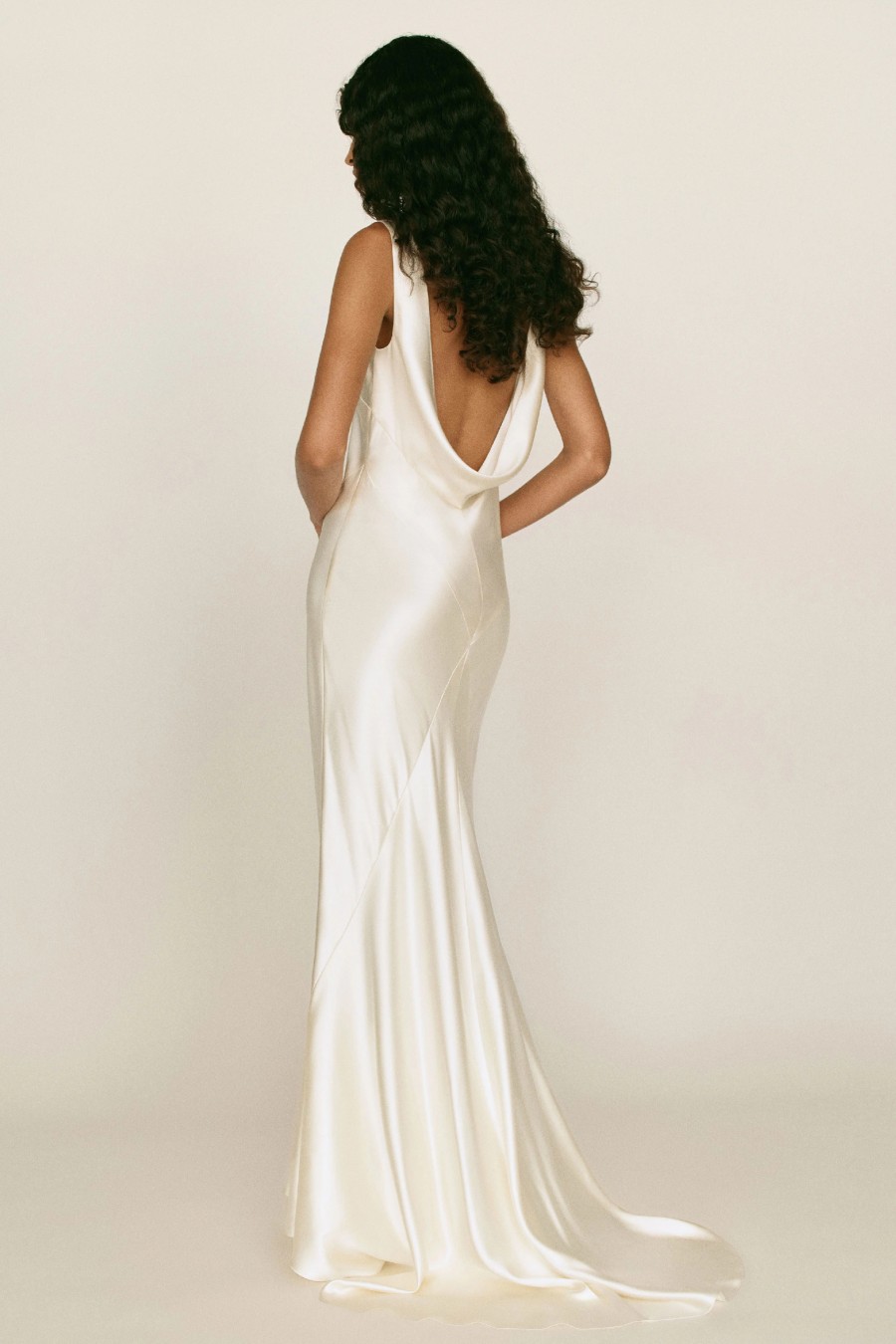
Silk Charmeuse and Liquid Satin — the slip dress fabric
Silk charmeuse and liquid satin are the fabrics that produce the kind of dress that looks like it is barely trying and photographs like a dream. Fluid, slightly transparent in layers, and extraordinarily responsive to the body — they drape rather than structure, pour rather than hold. The result is the slip dress aesthetic that has dominated the most fashion-forward end of bridal for the past several seasons.
What it does well: Movement. In photographs, particularly at golden hour, liquid satin catches the light in a way that feels almost cinematic. It responds to every breeze and every step, creating images that feel alive rather than posed.
What it requires: Confidence in how it sits on the body — these fabrics don't conceal, they reveal. They also require careful photography. Under harsh indoor flash or direct midday sun, satin can produce reflective hotspots where detail disappears entirely into bright white. If this is your fabric, discuss it with your photographer before the wedding so they can plan for it.
Best for: Intimate ceremonies, destination weddings, reception looks, outdoor evening events, garden parties. Any setting where movement and atmosphere are part of the image.
Season: Spring, summer, and early autumn. Charmeuse and liquid satin are lightweight and breathable but offer minimal warmth — not ideal for outdoor winter ceremonies.
Duchess Satin — the grand ballgown fabric
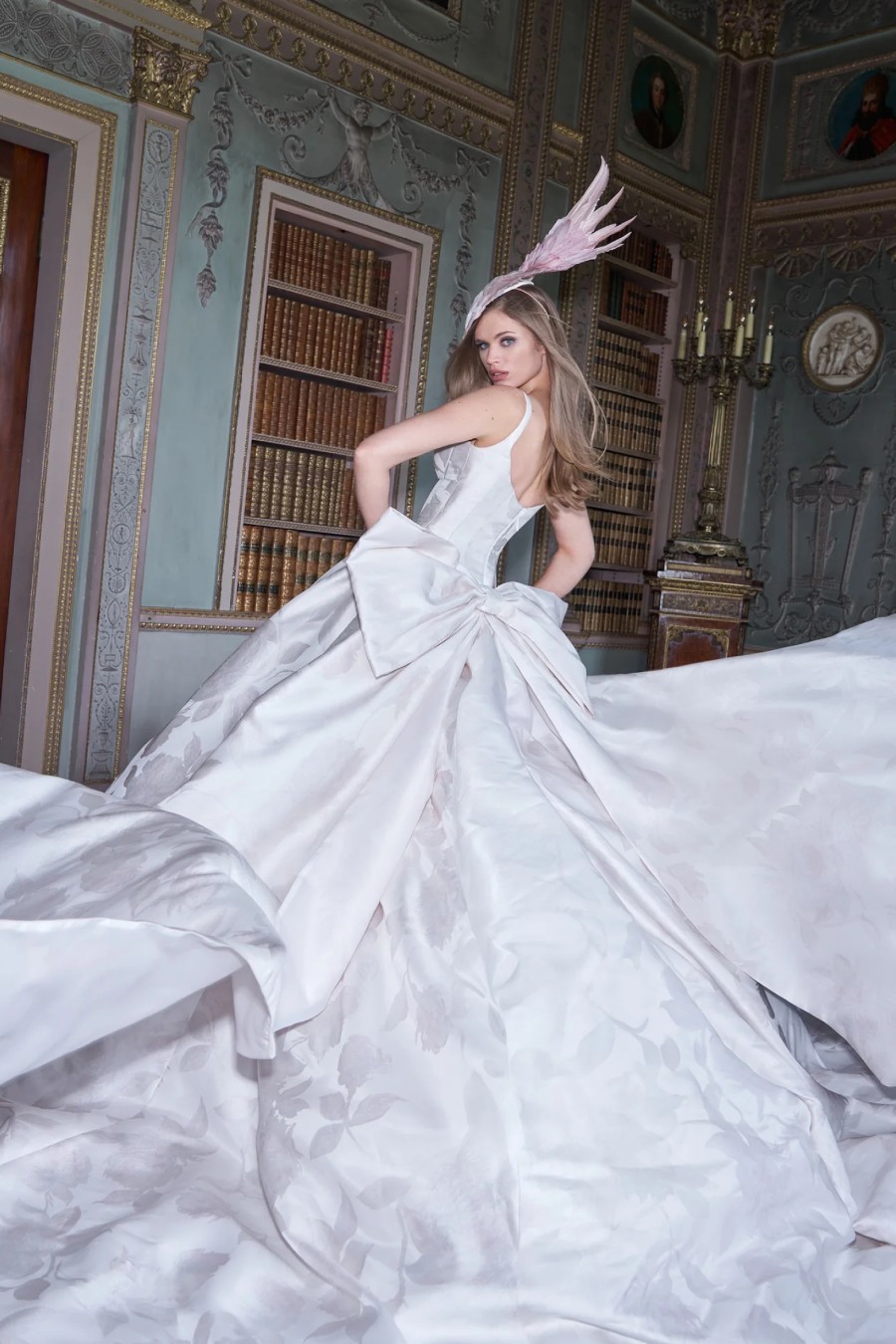
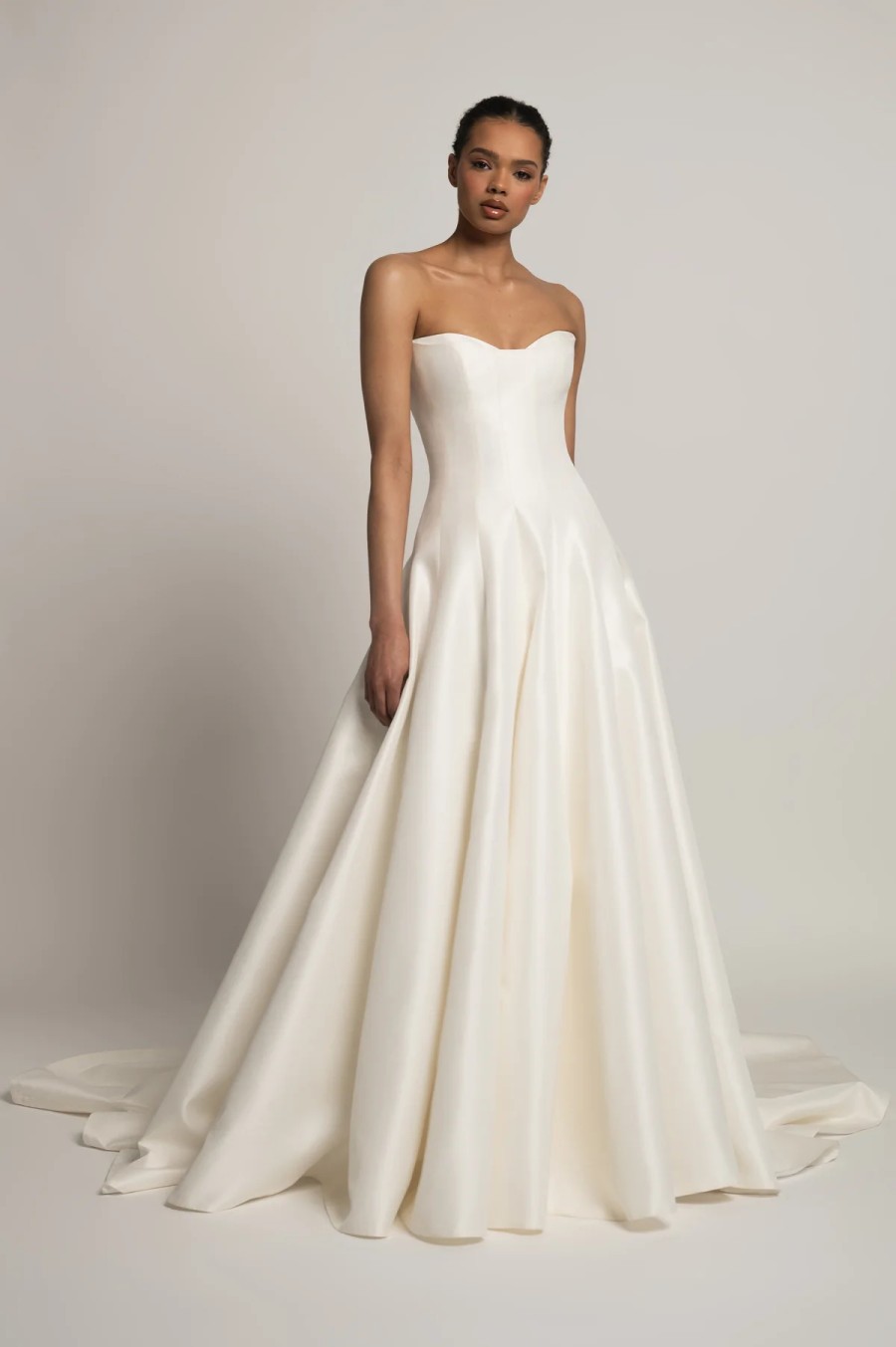
Duchess satin is satin's more formal, more structural cousin. Where liquid satin pours, duchess satin holds — it has a body to it, a weight, a presence that lends itself to the kind of silhouette that fills a room rather than floats through it. It is the fabric of choice for grand ballgowns, cathedral trains, and the kind of wedding dress that photographs like a portrait rather than a candid.
What it does well: Structure and sheen in perfect balance. Duchess satin holds its shape beautifully throughout a long day, resists wrinkles better than lighter fabrics, and photographs with a luminous, even glow that reads as luxurious without the hotspot problem of liquid satin.
What it requires: A silhouette that earns the weight. Duchess satin is not a forgiving fabric — it holds whatever shape it's cut into with complete fidelity, which means the cutting must be precise. It is also warmer than lighter fabrics, which matters for outdoor summer ceremonies.
Best for: Formal ballrooms, cathedrals, grand estate weddings, evening receptions with significant architecture. Any setting where scale and grandeur are part of the atmosphere.
Season: Autumn and winter. The weight and warmth of duchess satin makes it genuinely uncomfortable in July heat but exactly right for a December cathedral ceremony.
Mikado — the architect's fabric
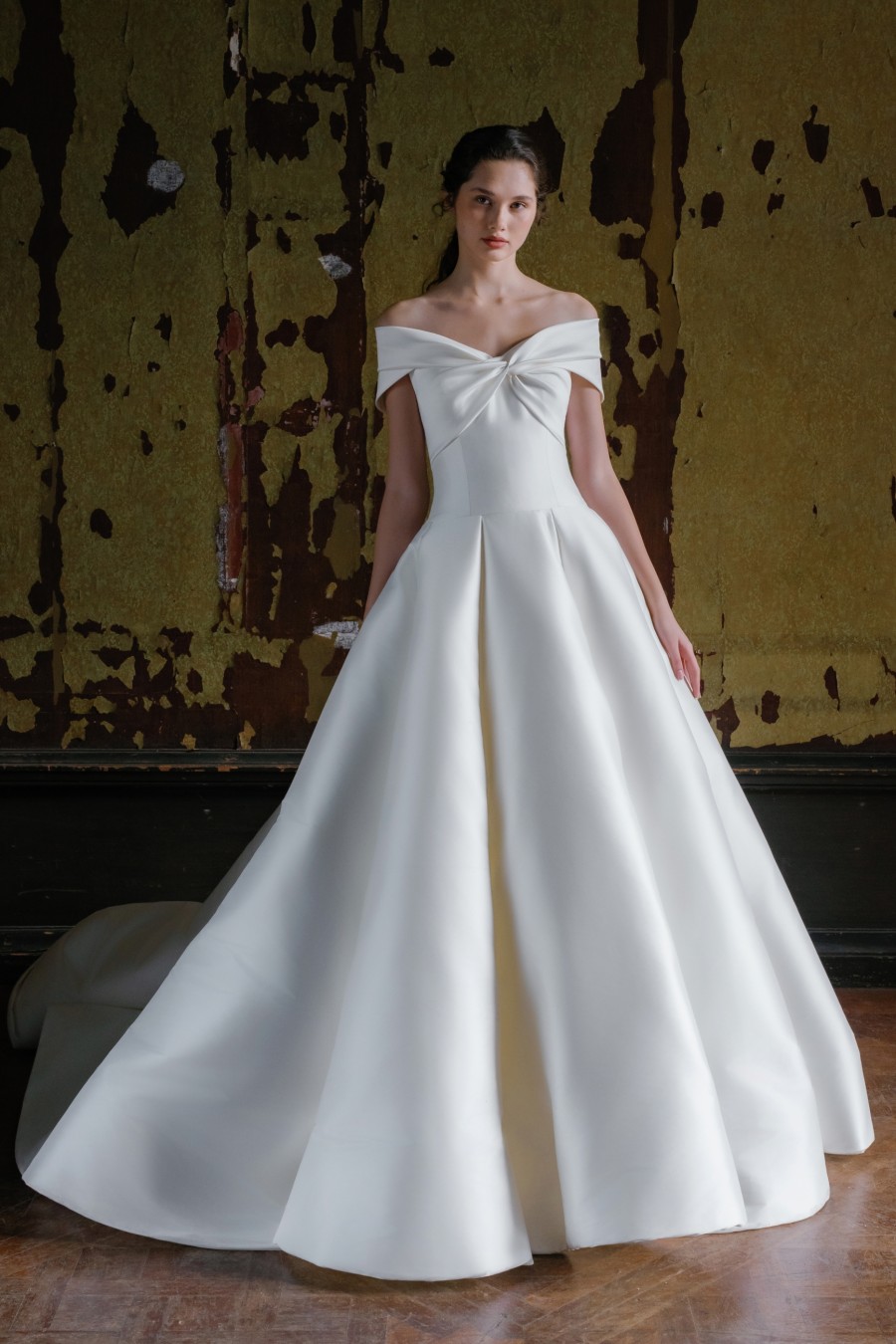
Mikado is the fabric that bridges the gap between the fluid and the structural — it has more body than crepe, more matte finish than satin, and a clean, tailored quality that makes it the fabric of choice for the most architectural and considered bridal silhouettes. It is the fabric behind many of the most quietly extraordinary minimalist wedding dresses of recent seasons, and it has become increasingly central to the work of the most design-forward bridal houses.
What it does well: Holding a precise shape without looking stiff. Mikado drapes cleanly, photographs with an even, luminous tone that never blows out in bright light, and maintains its structure throughout an entire day without assistance. It is also one of the most wrinkle-resistant bridal fabrics — which makes it an excellent choice for dresses that need to travel.
What it requires: Confidence in simplicity. Mikado works best when the design relies on the fabric itself — clean seams, considered silhouette, architectural detail. It is less suited to heavy embellishment, which can disrupt the fabric's characteristic precision.
Best for: Modern ceremonies, formal venues, city weddings, minimalist aesthetics, destination weddings where the dress needs to travel without losing its shape. Any setting where the architecture of the dress is the point.
Season: Year-round, with heavier weights better suited to autumn and winter and lighter Mikado blends working beautifully in spring and early summer.
Crepe — the most comfortable fabric in bridal
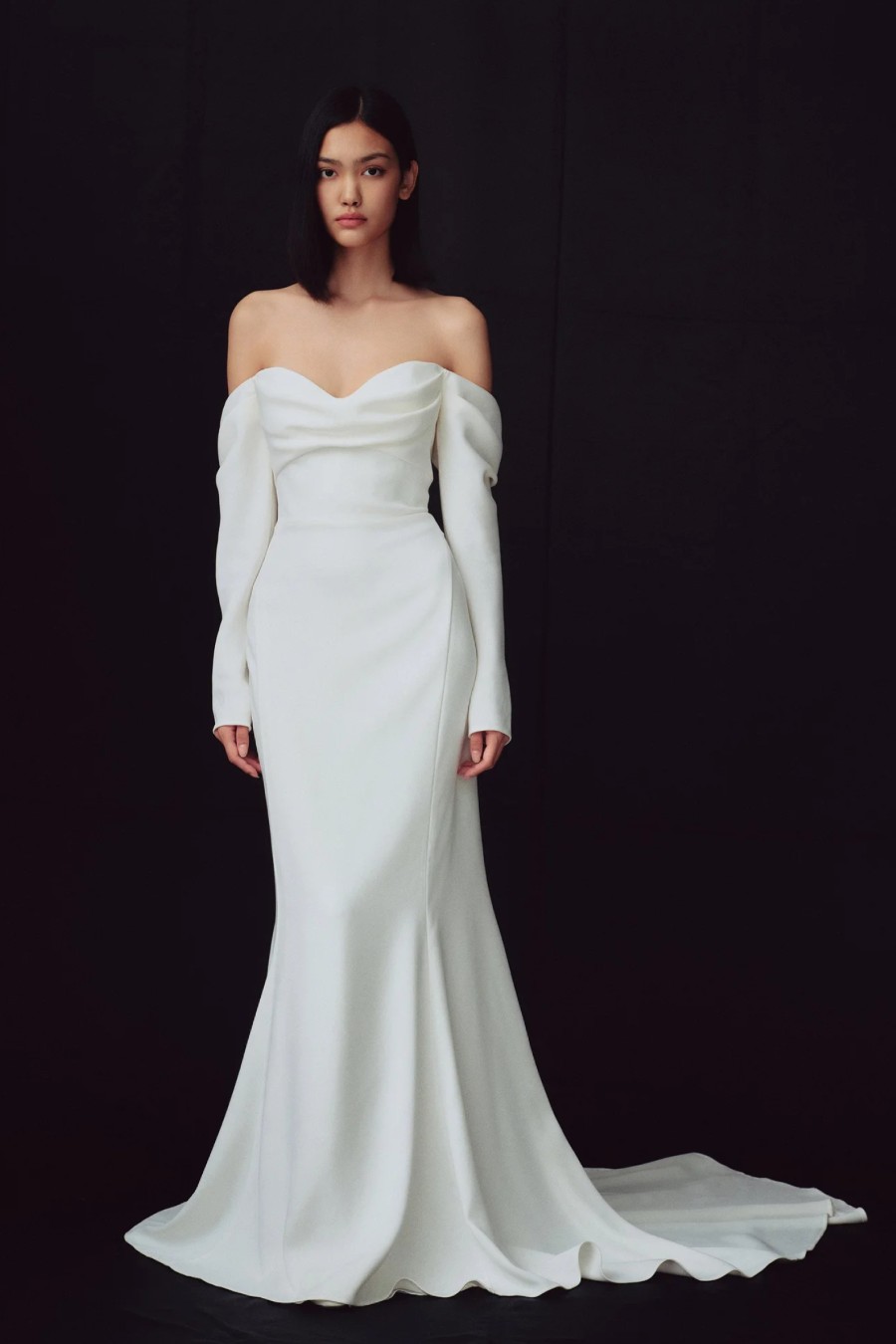
Crepe is the fabric that brides discover at hour six and spend the rest of the evening feeling grateful for. Smooth, matte, and possessed of a gentle natural stretch that no other bridal fabric quite replicates — it moves with the body rather than around it, which makes it simultaneously flattering, comfortable, and beautifully responsive in photographs.
What it does well: Everything quietly and well. Crepe drapes beautifully, photographs cleanly without reflective issues, works across a wide range of silhouettes from slim columns to soft A-lines, and remains comfortable throughout the longest of wedding days. It is the fabric of the modern bride who wants to feel extraordinary without feeling managed by her dress.
What it requires: Relatively little — which is part of its appeal. The main consideration is weight. Lighter crepe can feel slightly unstructured in very full silhouettes, making it best suited to columns, sheaths, and soft A-lines rather than dramatic ballgowns. Double crepe has more body and works across a wider silhouette range. It is also worth noting that crepe can show body-con lines more clearly than more structured fabrics — something to consider when choosing undergarments.
Best for: Almost any setting. Crepe is the closest thing bridal has to a universally appropriate fabric — it works in a garden, a ballroom, a city hall, or a vineyard without ever looking out of place.
Season: Year-round. Lighter weights for summer, heavier double crepe for autumn and winter.
Chiffon — the movement fabric
Chiffon is the fabric of atmosphere. Lightweight, slightly transparent, and extraordinarily responsive to air — it catches every breeze, moves with every step, and creates images that feel genuinely alive. It is the fabric of the outdoor ceremony, the beach wedding, the destination celebration in warm light, the kind of wedding where the environment is as much a part of the image as the dress itself.
What it does well: Movement and photography. In natural light, particularly at golden hour, chiffon does things that no structured fabric can replicate — it floats, it catches the light, it trails. These qualities make it one of the most photogenic bridal fabrics available.
What it requires: An understanding of its limitations. Chiffon is not a structured fabric — it needs to be layered, lined, or paired with a more supportive foundation to work as a wedding dress. It is also susceptible to wind in ways that can work beautifully in photographs and feel genuinely challenging in practice at a breezy outdoor ceremony. It wrinkles easily during travel and requires careful packing and steaming.
Best for: Outdoor ceremonies, beach and destination weddings, garden parties, any setting where movement and atmosphere are part of the aesthetic.
Season: Spring and summer. Chiffon offers minimal warmth and is not well suited to outdoor autumn or winter ceremonies.
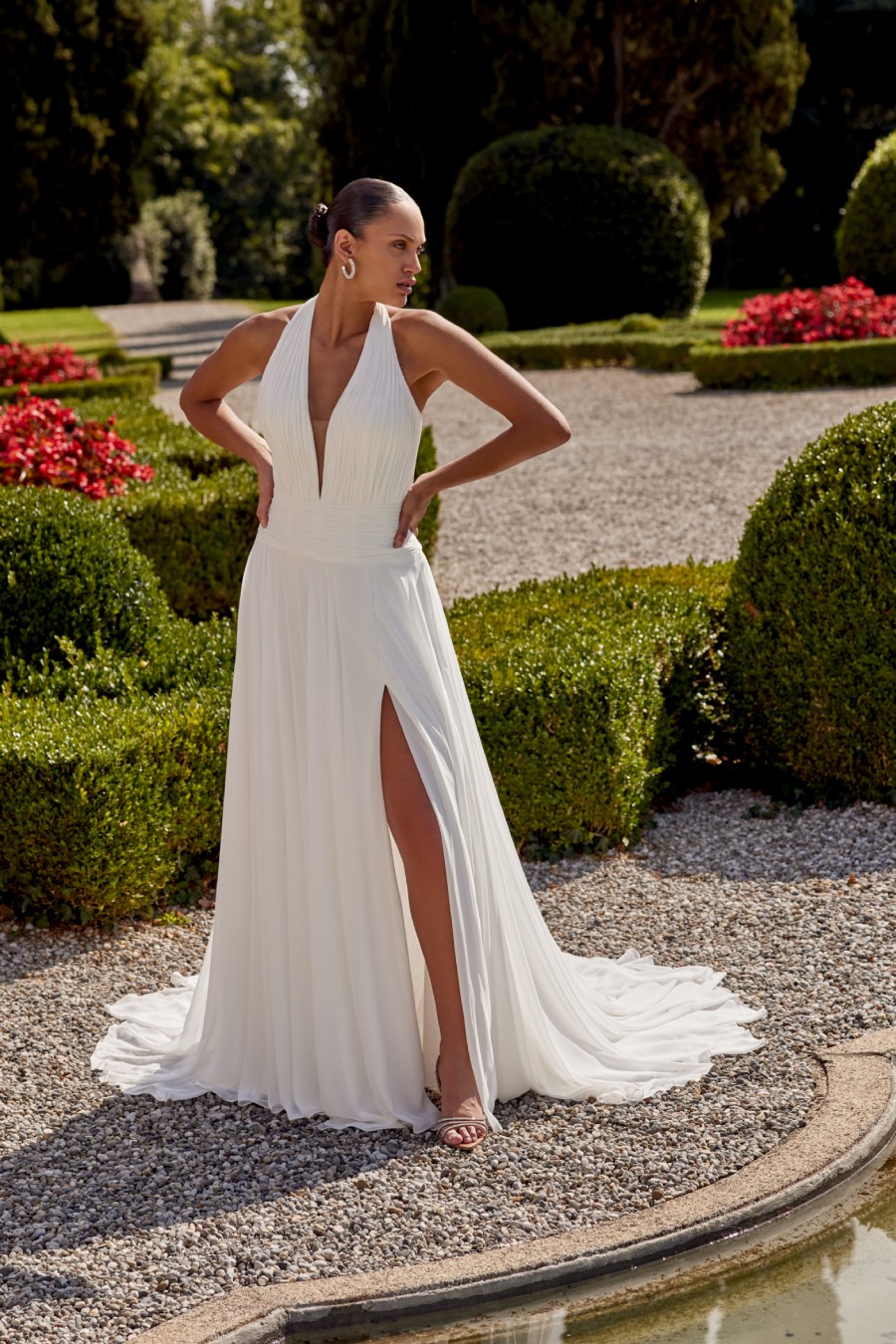
Organza — chiffon's more structured sibling
Organza occupies the space between chiffon and more structured fabrics — it has chiffon's lightness and transparency but a crispness and body that chiffon doesn't possess. Where chiffon floats, organza holds a shape. Where chiffon drapes, organza creates volume. It is the fabric of choice for full, airy skirts that maintain their silhouette without the weight of duchess satin or the stiffness of taffeta.
What it does well: Volume without weight. Organza can create extraordinary ballgown volume — full, sweeping skirts that move with genuine airiness — while remaining light enough to wear comfortably for an entire day. It also photographs beautifully, catching light with a subtle sheen that reads as elegant without the reflective challenges of heavier satins.
What it requires: An understanding of its crispness. Organza's structure is its greatest asset and its main limitation — it holds a shape beautifully but doesn't drape or flow the way chiffon does, which means it works best in silhouettes designed around volume rather than fluidity. It can also feel slightly stiff against the skin in large quantities, which is why it is most commonly used for skirts and overlays rather than fitted bodices. Like chiffon, it can be prone to creasing during travel and benefits from professional steaming before the wedding.
Best for: Spring and summer ballgowns, garden ceremonies, any setting where volume and lightness need to coexist. Particularly well suited to outdoor ceremonies where a heavy ballgown would feel inappropriate.
Season: Spring and summer primarily, though silk organza can work year-round depending on weight and layering.
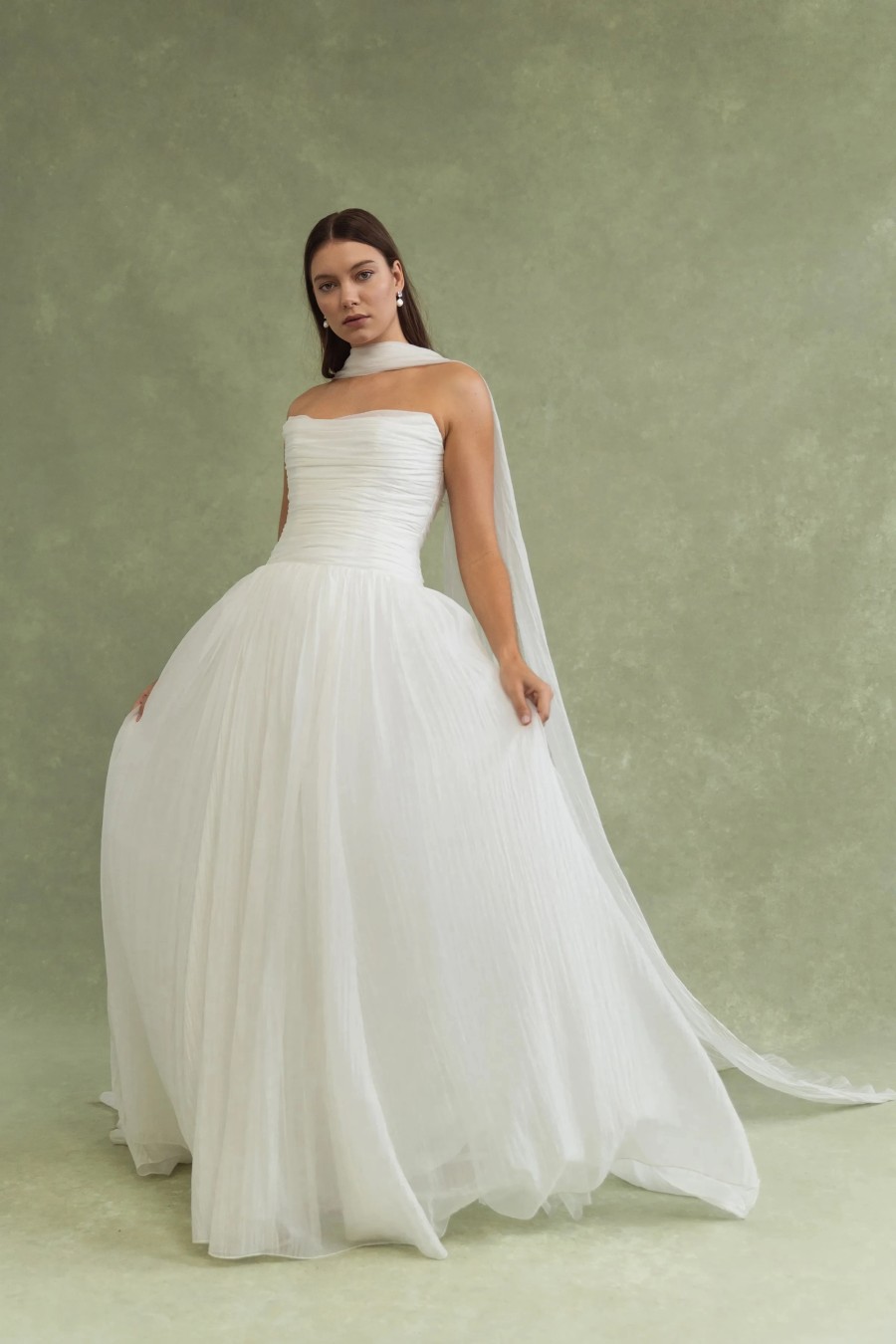
Tulle — the fabric of fantasy
Tulle is the fabric most associated with the idea of a wedding dress — the material of fairy tales, of full skirts, of veils that trail. Fine, net-like, and extraordinarily light, it creates volume through layering rather than weight, which makes it one of the most versatile bridal fabrics available. A single layer of tulle is almost nothing. Forty layers of tulle are a ballgown.
What it does well: Volume, movement, and photography. Tulle catches light and air in ways that produce extraordinary images — it trails, it floats, it swirls. The combination of volume without weight makes it uniquely suited to the kind of dress that needs to be dramatic without being physically overwhelming.
What it requires: Layering and a strong foundation. Tulle is almost never used alone — it needs to be layered to create volume and lined or paired with a more structured fabric at the bodice to provide support and shape. The number of layers determines the fullness of the skirt, which means construction decisions matter significantly. Tulle also requires careful packing and travel — it can compress and lose its volume in transit and needs time and space to be properly fluffed and steamed before wearing. Soft tulle and sparkle tulle behave differently both in person and on camera, so it is worth understanding which your dress uses and how your photographer plans to work with it.
Best for: Ballgowns, fairytale silhouettes, romantic ceremonies, any setting that calls for volume and movement simultaneously.
Season: Year-round, though lighter tulle constructions are better suited to warmer months and layered or lined tulle works better in cooler conditions.
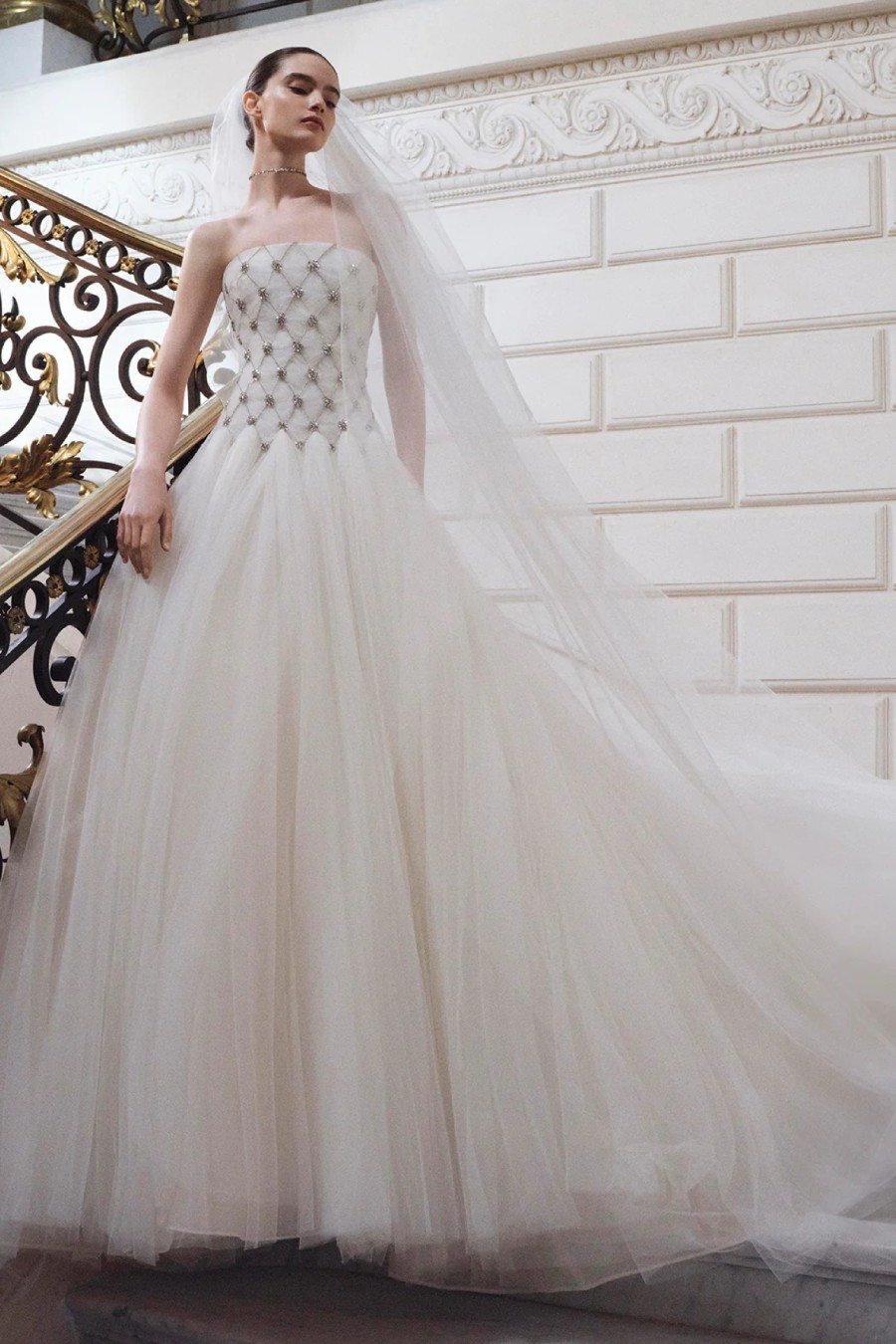
Lace — the fabric with the most variables
Lace is not a single fabric. It is an entire category of fabrics with different weights, patterns, sheerness levels, and structural qualities that make each type behave quite differently as a wedding dress material. Understanding the differences is worth the effort — choosing the wrong lace for the wrong setting is one of the most common fabric mistakes brides make.
Chantilly lace is the most delicate and the most romantic — fine, slightly transparent, and possessed of a floral pattern that is one of the most timelessly beautiful things in all of bridal. It photographs exquisitely in natural light and works beautifully as an overlay over a satin or crepe base. In bright artificial light or direct sun, however, Chantilly can lose its detail — the pattern disappearing into white. Worth discussing with your photographer if this is your fabric.
Corded lace is more structured, more defined, and considerably more architectural. The raised, three-dimensional quality of the pattern reads clearly in photographs in almost any lighting condition, and the weight of the fabric gives it a presence that Chantilly doesn't have. It is the lace of the statement dress — dramatic, considered, and clearly intentional.
Guipure lace is the most substantial and the most graphic — large, bold patterns with real weight and structure. It is at its most extraordinary as the primary fabric of a dress rather than as an overlay, and it photographs with a crispness and clarity that lighter laces rarely match.
What it does well: Romance, detail, and a connection to bridal tradition that no other fabric replicates. Lace adds dimension and visual depth to a dress that flat fabrics simply cannot — the pattern catches light, creates texture, and rewards a closer look in a way that is uniquely compelling in photographs. It is also one of the most versatile bridal fabrics in terms of silhouette — lace works on columns, A-lines, ballgowns, and everything in between.
What it requires: Understanding which type of lace you have — because the three main varieties behave quite differently and have different practical implications. Chantilly lace is delicate and requires careful handling; it can snag easily and needs to be stored and transported with care. Corded lace is more robust but heavier, which adds weight to the dress that lighter constructions don't have. Guipure lace is the most substantial of the three and can feel warm in summer heat — worth considering for outdoor warm-weather ceremonies. All lace benefits from professional steaming rather than ironing, and heavily beaded lace should always be handled by an experienced cleaner after the wedding.
Best for: The answer depends entirely on which lace. Chantilly for romantic, intimate settings with natural light. Corded for formal venues and settings where the dress needs to hold its own against grand architecture. Guipure for the most bold and editorial bridal aesthetic.
Season: Lace works year-round, with lighter constructions better suited to warmer months and heavier lace fabrics reading beautifully in autumn and winter.
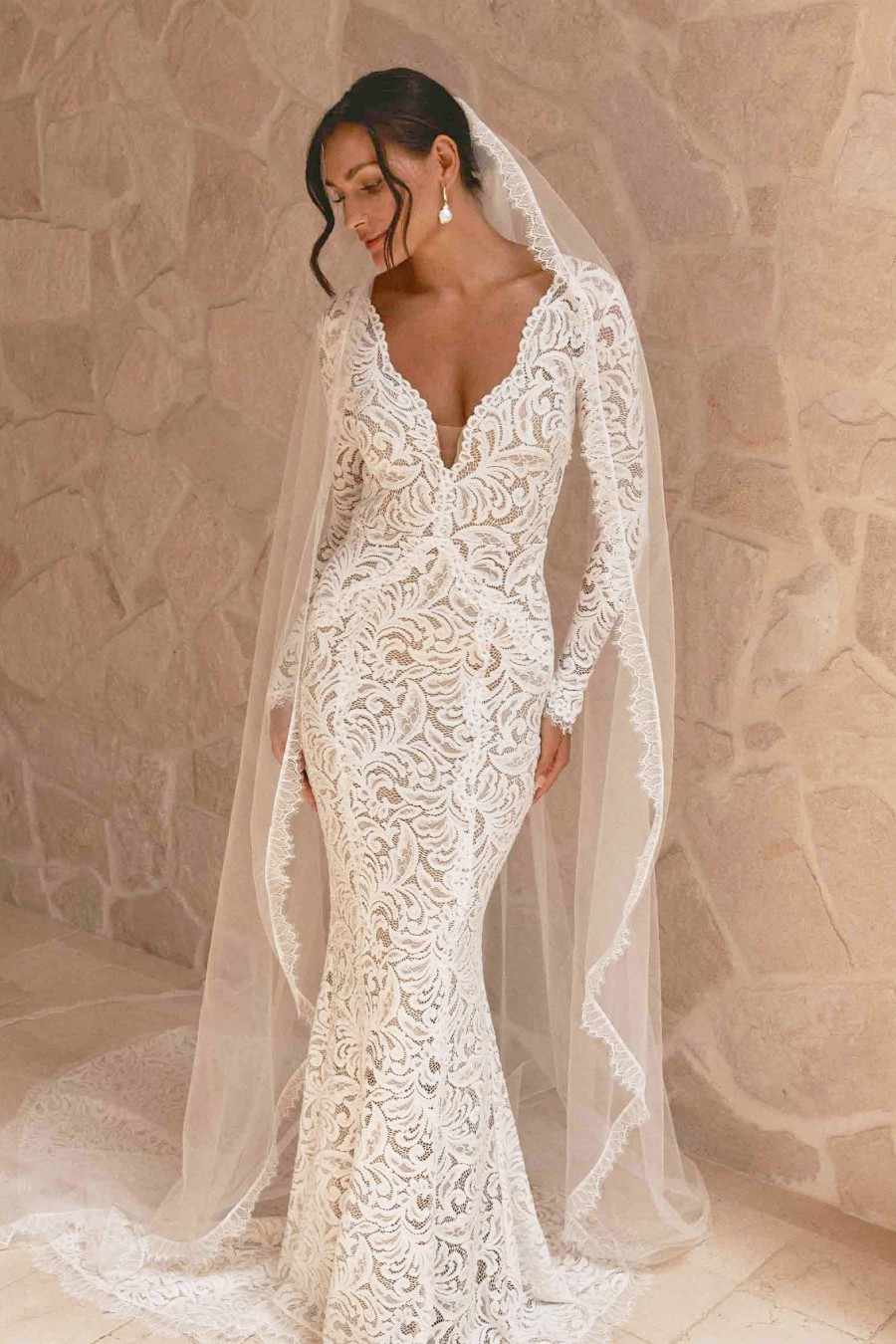
Taffeta — the forgotten fabric having a moment
Taffeta is having a quiet renaissance in bridal right now — and for good reason. Crisp, slightly rustling, and possessed of a matte-meets-sheen quality that photographs beautifully without the reflective challenges of heavy satin, it creates some of the most extraordinary structured silhouettes in current bridal collections. Several of the most compelling editorial bridal looks of recent seasons have been built on taffeta — and its versatility is becoming increasingly recognized by the most design-forward designers.
What it does well: Structure and volume in equal measure. Taffeta holds a silhouette with the kind of architectural precision that most fabrics can only aspire to, while maintaining a lightness and movement that duchess satin doesn't have. It also travels and packs better than many bridal fabrics, making it a quietly excellent choice for destination weddings.
What it requires: Confidence in its formality. Taffeta has a slightly more formal, occasion-specific quality than other bridal fabrics — it reads as dressy in a way that crepe and chiffon do not, which makes it less suited to relaxed, casual, or bohemian wedding aesthetics. It also has a characteristic rustling sound when the wearer moves — a quality some brides love and others find distracting, and worth knowing about before committing. Like organza, taffeta can crease in transit and benefits from professional steaming on arrival. Silk taffeta in particular requires careful cleaning and storage after the wedding to maintain its structure and sheen.
Best for: Ballgowns, structured A-lines, formal venues, evening receptions, any setting where the silhouette is the primary design statement.
Season: Autumn and winter primarily, though lighter taffeta constructions work beautifully in spring.
The fabric questions worth asking before you buy:
Before committing to a dress, run through these five questions about the fabric:
01. How will this fabric perform in the specific lighting conditions of my venue? Indoor flash, outdoor natural light, and evening candlelight all behave very differently with different fabrics. Discuss it with your photographer.
02. Is this fabric appropriate for the season and climate of my wedding? The most beautiful fabric in the wrong temperature is a practical problem, not just an aesthetic one.
03. Will this fabric survive the journey to my wedding? If you are traveling with your dress, fabric choice matters enormously. Some wrinkle, some crush, some require professional steaming that may not be available at a destination.
04. How will this fabric feel at hour eight? The fabric that photographs most beautifully is not always the fabric that feels most comfortable for a full wedding day. Both matter.
05. Does this fabric serve the silhouette I love? Every fabric has silhouettes it excels in and silhouettes it compromises. Liquid satin is extraordinary as a slip dress and challenging as a ballgown. Mikado is extraordinary as a clean column and less suited to heavy embellishment. Make sure the fabric and the silhouette are working together rather than against each other.
The right fabric for your specific wedding exists. Knowing what you're looking for is what allows you to find it.
By Kathryn Schrotenboer

 Anonymous Buyer