Because the best dress search starts long before you step into a boutique or open your first website...
Most brides start shopping for a wedding dress the same way — with a mood board, a vague sense of what they want, and a booking at the nearest boutique. And while there is nothing wrong with that approach, there is a better one. The brides who walk out of their first appointment with clarity — and often with a yes — are almost always the ones who did a specific kind of thinking before they arrived. Not browsing. Not pinning. Thinking.
These are the questions worth sitting with before you step into a fitting room for the first time, or start your search for the perfect dress online.
01. What kind of bride do I actually want to be?
Not the bride you have been imagining since you were twelve — though that version is useful to know too — but the bride you are now, at this specific point in your life, getting married to this specific person, at this specific kind of wedding. Are you the bride who wants to make an entrance? The one who wants to feel like herself, only more so? The one who has always known exactly what she wanted, or the one who is genuinely open to being surprised?
There is no wrong answer. But knowing the answer before you start shopping saves an enormous amount of time — and emotional energy — in the fitting room.
02. What is the single most important thing I want to feel in my dress?
Not look. Feel. Confident, romantic, powerful, ethereal, elegant, free, surprising, traditional, unconventional — whatever word comes first is usually the truest one. Write it down. Bring it with you. When you are standing in a dress that photographs beautifully but doesn't produce that feeling, the word you wrote down will tell you what to do.
03. Where am I actually getting married?
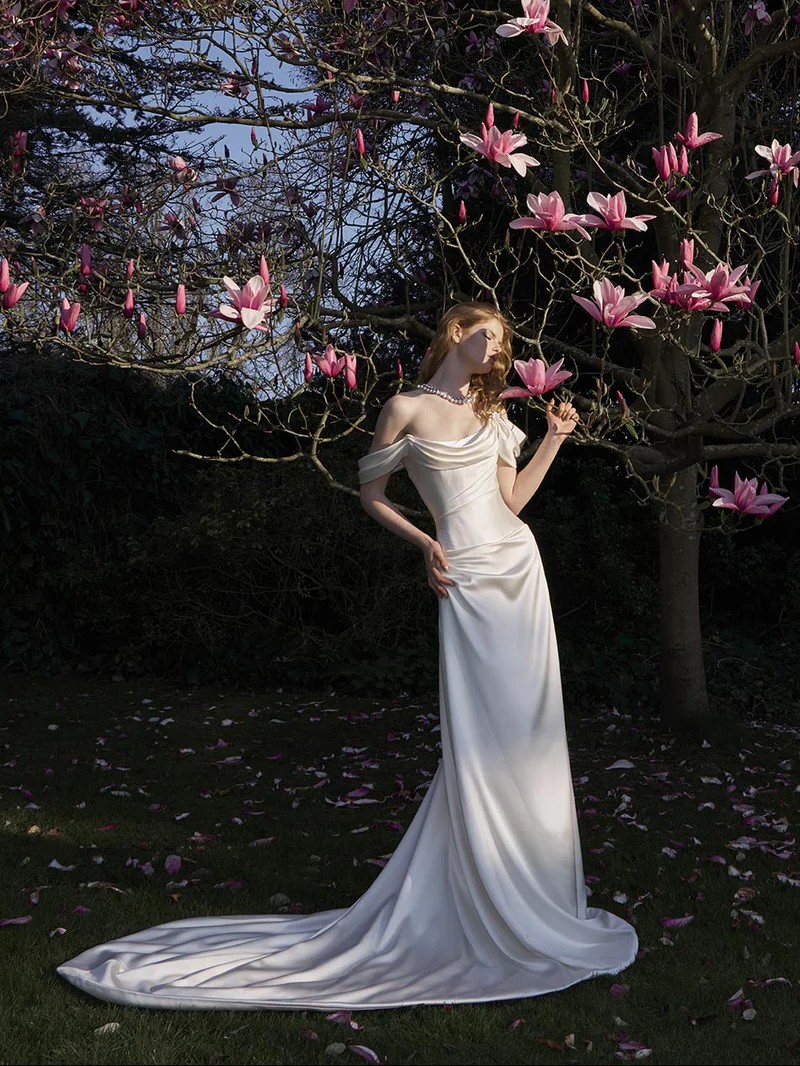
The venue is one of the most underused tools in dress shopping. A grand cathedral calls for a different gown than an intimate garden. A rooftop in the city calls for a different gown than a clifftop in Tuscany. A beach ceremony in the evening light calls for something completely different than a formal ballroom at midday. Before you fall in love with a silhouette, spend time really seeing your venue — its scale, its light, its texture, its atmosphere — and ask yourself what kind of bride belongs in that space. The answer will shape your search more than any Pinterest board.
04. How do I want to move?
This one is practical and it matters enormously. Will you be walking across cobblestones, grass, or a polished marble floor? Will you be dancing for four hours? Sitting through a long ceremony? Navigating a narrow aisle with fifty people watching? The dress that looks extraordinary standing still is not always the dress that works in motion — and motion is what your wedding day mostly consists of. A gown that moves with you rather than against you will always, always produce better photographs and a better experience.
05. What is my actual relationship with embellishment?
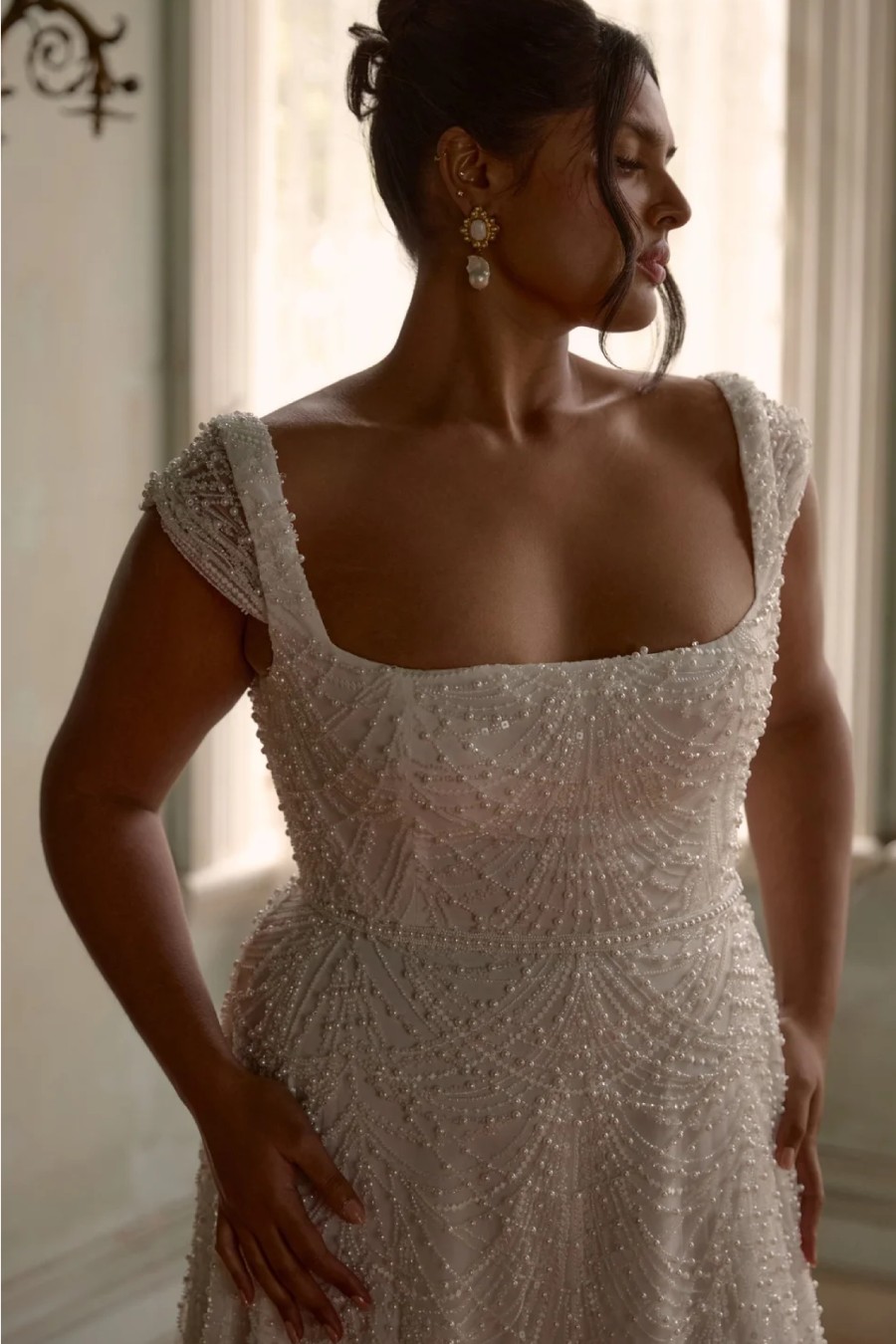
Not your aspirational relationship with embellishment — your actual one. Some brides live in simple, clean clothing and assume they want a simple, clean wedding dress. Some arrive at a boutique in jeans and a sweater and fall completely apart in front of a heavily beaded ballgown. Both are completely valid. But understanding where you genuinely sit on the embellishment spectrum before you start shopping saves you from falling in love with something that doesn't fit your real life — and from dismissing something that actually does.
06. Am I shopping for the photos or for the day?
This is one of the most useful questions a bride can ask herself — and one of the most honest. There is a version of wedding dress shopping that is entirely photographic: finding the dress that will look most extraordinary in the images that will live forever. There is another version that is entirely experiential: finding the dress that will make the actual day feel most like you. The best dress sits at the intersection of both. But knowing which instinct is stronger in you helps you weight your priorities correctly when you are standing in a fitting room trying to make a decision.
07. What is my honest budget — and what am I actually willing to spend?
These are two different numbers and they are both worth knowing. The honest budget is what you have genuinely set aside for a dress. The number you are actually willing to spend is what you would pay if you found the right one. Knowing both before you shop means you can make a clear-eyed decision when the moment comes — rather than making an emotional one in a fitting room and working out the consequences later. If the gap between the two numbers is significant, the pre-loved market is worth considering seriously before you begin — it is consistently one of the best ways to close that gap without compromising on the dress.
08. Who am I bringing — and do they know their job?
The people you bring dress shopping have an outsized influence on your decision. A well-meaning mother who has been picturing you in a ballgown since you were born is a different presence in a fitting room than a best friend who knows your style better than you do. Before you invite anyone, think about what role you need each person to play — honest feedback, emotional support, practical input, or simply a familiar face — and have that conversation with them in advance. The appointment will go better for everyone.
09. What do I know about my body that I want my dress to work with?
Not what you want to hide — that framing is rarely useful — but what you know about yourself that you want the dress to honour. Perhaps you feel most yourself in something with structure. Perhaps you feel most yourself in something fluid and unstructured. Perhaps there is a specific detail — a neckline, a sleeve, a fabric — that you have always known you look and feel extraordinary in. Bring that knowledge into the fitting room and use it actively rather than letting the dress make all the decisions.
10. Am I open to being surprised?
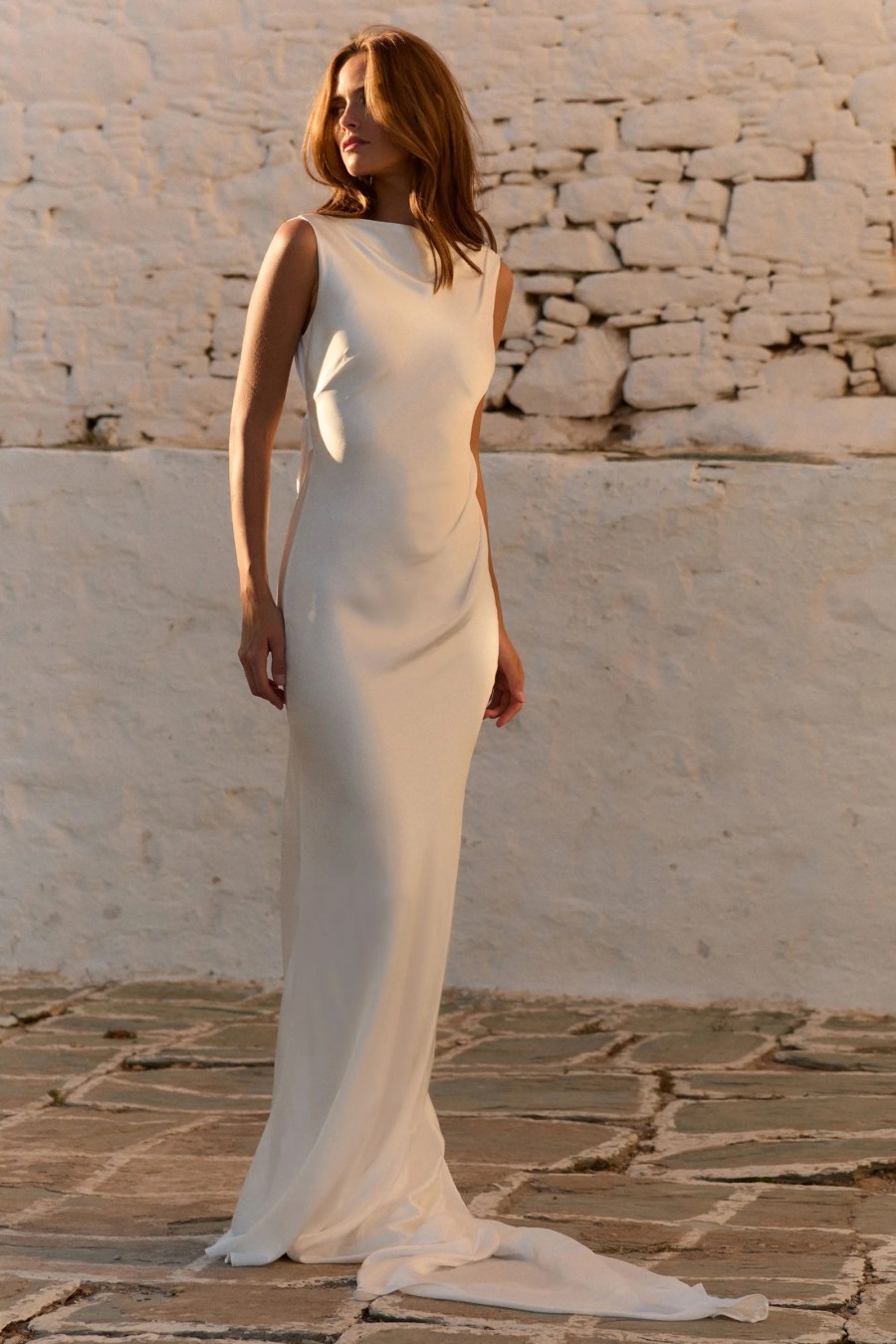
This is perhaps the most important question of all. The brides who find the best dresses are almost always the ones who arrive at a boutique with clear instincts and genuine openness at the same time — who know what they think they want but are willing to try the thing that doesn't look like it on the hanger. Some of the most extraordinary wedding dress moments happen when a bride puts on something she would never have chosen for herself and finds, completely unexpectedly, that it is exactly right.
Go in knowing what you want. Stay open to what you don't know yet. That combination almost always leads somewhere worth going.
One last thing: the pre-loved market rewards this kind of preparation
All of this thinking pays particular dividends when you are shopping pre-loved. The Stillwhite search is vast and beautiful and can feel overwhelming without a framework. But a bride who knows her venue, her feeling word, her silhouette instincts, and her honest budget can search with the kind of specificity that turns a five-hour scroll into a thirty-minute discovery. The dress is there. Knowing what you are looking for is almost always the difference between finding it and missing it.
By Kathryn Schrotenboer

 Anonymous Buyer